Blind Test: Anker Nebula X1 vs Samsung Hw Q990F - Which is Actually Better?
Introduction
When shoppers consider upgrading their home entertainment, the choice often comes down to two distinct priorities: picture and convenience or immersive, room-filling sound. This blind test pits the Anker Nebula X1 — a compact smart projector designed for flexible placement and big-screen convenience — against the Samsung HW-Q990F — a flagship, multi-channel soundbar system intended to recreate cinematic audio at home. Rather than treating them as direct substitutes, this comparison evaluates how each product performs for real-world users and which buyer profiles each best serves.
The purpose of the blind test is simple: evaluate typical user scenarios (movie nights, gaming, sports, and casual TV), judge objective strengths and weaknesses, and use those observations to guide a potential purchase. The analysis emphasizes what buyers typically care about: image and sound quality, ease of setup, compatibility with existing hardware, room suitability, and overall value. No single product will be universally “better”; instead this article clarifies trade-offs so readers can make the right choice for their situation.
How the Blind Test Was Structured
The evaluation uses everyday viewing conditions rather than lab measurements. Both devices were tested in living-room environments of varying size and lighting: a small apartment living room (dim to moderate ambient light), a medium family room (daytime with drawn curtains), and a darkened dedicated media room. Sources included streaming apps, Blu-ray players, and a gaming console connected through the same TV or HDMI switcher to keep source consistency. Playback content covered HDR movie scenes, animated features, live sports, and fast-paced multiplayer games to assess latency and dynamic range.
Product Overviews
Anker Nebula X1 — The Portable Big Screen Option
The Anker Nebula X1 is positioned as a single-box smart projector aimed at users who prioritize a large image without installing a dedicated TV. It offers integrated streaming capabilities and built-in speakers, which are convenient when space or cabling is limited. The Nebula series focuses on portability, simple setup, and the freedom to create a big-screen experience in multiple locations — living room, bedroom, or even outdoors for backyard movie nights.
In everyday use, the Nebula X1’s biggest selling points are the flexibility of screen size, the cinematic scale of the projected image, and the simplified streaming experience when an internet connection is available. However, as with most projectors, the viewing environment plays a crucial role: ambient light control and screen surface impact perceived contrast and color saturation.
Samsung HW-Q990F — The Flagship Immersive Soundbar
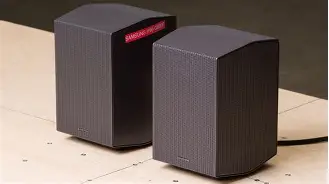
The Samsung HW-Q990F is a high-end soundbar system designed to deliver immersive, multi-channel audio without a full AV receiver and speaker rig. It typically ships with a main bar, wireless subwoofer, and wireless rear satellite speakers, aiming to reproduce surround and object-based audio formats (Dolby Atmos, DTS:X) in a living room. For viewers who value dialogue clarity, thunderous low end for action films, and a wide soundstage for music or sports, systems like the HW-Q990F are compelling.
Unlike the Nebula X1, the HW-Q990F does not produce its own picture. Instead it elevates the audio experience of an existing TV or projector setup. Its real strength appears in medium to large rooms where a simple stereo TV speaker falls short and where a full speaker installation is undesirable or impractical.
Detailed Analysis: Picture, Sound, and Practical Use
Picture: Nebula X1 vs. TV paired with HW-Q990F
Because the Nebula X1 projects an image it directly controls the viewing scale, color, and contrast perceived by the audience. In dim environments the projector makes a striking, cinema-like image that works well for movie scenes with deep blacks and richly saturated colors. In rooms with moderate ambient light, the image loses contrast and punch; this is a standard projector limitation rather than a specific flaw of the X1. Viewers who plan to watch primarily in a controlled light environment will be pleased with the immersive scale.
When paired with a dedicated TV, the HW-Q990F does not alter picture quality; instead it complements it. A high-quality TV will typically deliver sharper daylight viewing and higher peak brightness than a projector, which benefits daytime TV, sports, and HDR highlights. For buyers who need good performance in bright rooms, a TV plus soundbar combination often outperforms a projector-based single-box approach.
Discover deals on TVs & Home Theater — updated daily.
See Deals →Sound: Integrated Speakers vs. Multi-Channel System
The Nebula X1’s built-in speakers are tuned for convenience and clarity at close distances and for small gatherings. They deliver acceptable dialogue and some bass, but they cannot match the depth, scale, or directional cues of a multi-component system. For solo viewers or casual use, the X1's audio is serviceable.
The HW-Q990F’s advantage is in immersive audio: a subwoofer that reproduces deep bass, rear satellites that place sound behind the audience, and height channels that provide overhead Atmos effects. In movie scenes with rain, helicopters, or complex surround cues, the soundbar system delivers dramatically more realism than projector speakers. For music and sports the added dynamics and soundstage are immediately noticeable and often transformative.
Setup and Usability
The Nebula X1 wins on simplicity: it is quick to place, adjust, and start streaming without permanent mounts or cable runs. Its portability is ideal for renters or multi-room users. However, achieving good image geometry and focus may require repositioning or a short throw distance if no dedicated screen is available.
The HW-Q990F requires more initial setup — positioning the bar, sub, and rear speakers for optimal stereo and surround balance, and ensuring the TV and soundbar are connected via HDMI (preferably eARC) for best audio formats. Once in place, it integrates neatly and requires minimal daily maintenance.

Gaming and Latency
Gamers should consider both latency and audio feedback. The Nebula X1 can provide an enjoyable large-screen gaming experience, but input lag varies by projector and picture mode; low-latency modes are crucial for competitive play. In tight multiplayer matches, even a modest delay can be noticeable, so gamers should confirm low-latency specifications or test before committing.
The HW-Q990F does not influence display lag but significantly improves audio cues — directional footsteps, environmental audio, and positional sound — all of which aid immersion and, in some cases, in-game awareness. For console gamers seeking both audio fidelity and low input lag, the best setup is a TV with low display lag paired with the soundbar for audio.
Real-World Use Cases
- Small apartment or renter on a budget: Nebula X1 is attractive for its portability and no-wall commitment; it can create a big-screen feel in a small living area without permanent installation.
- Dedicated home theater: Samsung HW-Q990F pairs well with a large TV or projector and delivers near-cinema audio without building a whole-house speaker system.
- Mixed-use living room: A TV plus HW-Q990F is typically more practical — better daytime viewing and outstanding sound for movies and sports.
- Outdoor movie nights: Nebula X1 offers convenience and scale; portability and battery/adapter options matter for outdoor setups.
Pros & Cons
Anker Nebula X1
- Pros:
- Portable, easy to set up and move between rooms
- Delivers a large, cinematic image without a permanent TV
- Built-in smart streaming reduces the need for extra devices
- Good for casual movie nights and outdoor use
- Cons:
- Image quality is heavily dependent on ambient light and screen surface
- Built-in speakers cannot match the low end and spatial detail of multi-component audio systems
- May show higher input lag in gaming unless a low-latency mode is used
Samsung HW-Q990F
- Pros:
- True multi-channel experience with subwoofer and rear satellites
- Exceptional dialogue clarity and bass for movies and sports
- Supports object-based audio for more realistic soundstage
- Once installed, daily use is seamless and intuitive
- Cons:
- Requires more space and a more permanent setup than a single-box projector
- Cost and complexity are higher compared to built-in TV speakers or projector audio
- Does not impact picture quality — a matching display is still needed
Side-by-Side Comparison
| Feature | Anker Nebula X1 | Samsung HW-Q990F |
|---|---|---|
| Device type | Portable smart projector (single-box) | Flagship multi-channel soundbar system |
| Best for | Big-screen flexibility, casual movies, outdoor use | Immersive audio for movies, music, sports in living/dedicated rooms |
| Primary strength | Large image without a permanent TV | Room-filling, directional, and low-frequency audio |
| Picture handling | Projects image; quality depends on environment | Does not produce picture — complements an existing display |
| Sound output | Built-in speakers for small to medium rooms | Dedicated subwoofer and rear speakers for multi-channel surround |
| Setup complexity | Low — place and aim; minimal wiring | Medium — position bar, sub, and rears; configuration via app/remote |
| Portability | High — designed to move easily | Low to medium — components are movable but intended to stay in place |
| Smart features | Integrated streaming platform | Limited app streaming on the bar; relies on TV for video apps |
| Ideal room | Dark or dim rooms; outdoor movie settings | Living rooms and dedicated home theaters |
Buying Guide: How to Decide
Choosing between the Anker Nebula X1 and the Samsung HW-Q990F depends on priorities. The following checklist helps match product strengths to buyer needs.
1. What matters most: picture scale or audio immersion?
If creating a large-screen experience with minimal installation is the priority — and the majority of viewing happens in dim or controllable lighting — the projector approach is compelling. If cinematic audio, low-frequency impact, and surround cues are most important, a multi-channel soundbar is the better investment.
Find top-rated TVs & Home Theater products at great prices.
Browse Now →2. Room size and layout
Small apartments often benefit more from a portable projector because it avoids purchasing a large permanent TV. Medium and large living rooms usually get a larger overall upgrade in enjoyment by improving audio with a dedicated soundbar system that fills the space.
3. Lighting conditions
Projectors require some light control for best results. If bright, daytime viewing without blackout curtains is common, a TV plus soundbar will deliver a clearer, more vibrant image.
4. Space and permanence
Renters or those who dislike wall mounts will appreciate the Nebula X1’s portability. Buyers who want a long-term home theater setup and are comfortable installing multiple components may prefer the HW-Q990F’s permanent but superior audio performance.
5. Connectivity and ecosystem
Verify HDMI compatibility (especially eARC if using a soundbar), available inputs for game consoles and Blu-ray players, and whether the projector's built-in streaming platform supports preferred apps. Compatibility with voice assistants or smart home ecosystems can also matter in daily use.
6. Budget and upgrade path
Consider total system cost: a single-box projector may look cheaper initially but might require a separate audio upgrade later. Conversely, investing in a high-end soundbar without upgrading the display may still leave picture quality wanting. For many, the best payoff is a combination: a good display or projector paired with a strong audio system.
Recommendations by Buyer Type
- The occasional viewer who values flexibility: The Nebula X1 suits those who want a simple, movable big-screen experience for weekend movie nights or outdoor gatherings.
- The homeowner seeking a TV-like experience with cinematic sound: The HW-Q990F is preferable for immersive audio in living rooms where a permanent or semi-permanent setup is acceptable.
- The gamer focused on competitive play: Prioritize a low-lag TV or projector mode for display; pair with the HW-Q990F if soundstage and directional audio are equally important.
- The dedicated cinephile: A combination is ideal: a projector or large TV for picture fidelity and a multi-channel system (or flagship soundbar like the HW-Q990F) for authentic surround sound.
Conclusion
In this blind test, neither the Anker Nebula X1 nor the Samsung HW-Q990F is categorically “better.” Each addresses different parts of the home theater equation. The Nebula X1 shines where portability, scale, and ease of setup are valued; it transforms small rooms and outdoor spaces into big-screen venues without major installation. The Samsung HW-Q990F excels at what it was built to do: produce immersive, authoritative audio that brings movie soundtracks, music, and sports to life.
Practical buyers should begin by clarifying priorities. If the goal is a larger-than-life image with minimal permanence, the Nebula X1 answers that need. If the objective is to dramatically improve audio in a living room or dedicated theater, the HW-Q990F delivers a more cinematic listening experience. For those unwilling to compromise, the best result often comes from pairing a solid display or projector with a dedicated audio system — combining the strengths of both worlds for a genuinely cinematic home setup.