Is the Alienware 18 Area 51 2025 Rtx 5080 Still Good in 2026? Long-Term Review
It has been exactly fourteen months since I lugged a massive, curiously heavy box into my office and unboxed what was, at the time, the absolute pinnacle of mobile gaming technology: the Alienware 18 Area 51 (2025 model) equipped with the NVIDIA GeForce RTX 5080. When I first hit the power button and saw that familiar alien head glow against the "Darker Side of the Moon" chassis, I was both thrilled and a little skeptical. Could a laptop this large—and this expensive—really justify its existence as we moved into 2026? After a year of using it as my primary workstation, my dedicated gaming rig, and occasionally an improvised space heater, I finally feel qualified to answer that question.
In the world of electronics, a year is an eternity. We’ve seen new mobile architectures, the rise of even more demanding ray-traced titles, and the constant creep of software bloat. However, the 2025 Area 51 wasn't built like a standard laptop. It was designed as a desktop replacement in the truest sense. Over the past year, I’ve taken this machine through hundreds of hours of Cyberpunk 2077: Phantom Liberty, 4K video rendering sessions, and daily multitasking that would make a workstation-grade tablet weep. Here is my honest, long-term assessment of how this beast has held up.
The Design: Living with the Giant
The first thing I noticed when I started living with the Area 51 daily was that "portable" is a relative term. I’ve been using this for over a year now, and I can tell you that my desk has become its permanent home. At nearly 9 pounds for the machine alone, plus the two power bricks required to feed the RTX 5080 and the high-TDP processor, I stopped trying to bring this to coffee shops about three weeks into ownership. What I found was that the build quality, however, is exceptional. Unlike the thinner m-series laptops Alienware produces, the Area 51 feels like it's carved out of a single block of magnesium alloy.
One thing that bothered me initially was the rear I/O shroud. While it looks cool with the RGB ring, it makes the footprint of the laptop incredibly deep. I had to buy a deeper desk just to ensure I had enough room for a mousepad in front of it. On the plus side, after a year of plugging and unplugging peripherals, the ports haven't loosened or shown any signs of wear. The "Legend 3.5" design language still looks futuristic in 2026, though I did find that the matte finish on the palm rest has started to show some slight "polishing" in the areas where my wrists sit—a common casualty of heavy gaming.
The RTX 5080 Performance: A Year Later
When this machine launched in early 2025, the RTX 5080 was the "sweet spot" of the high-end. It utilized the Blackwell architecture to provide a massive leap in frame generation and ray reconstruction. In my experience, the biggest surprise hasn't been the raw horsepower, but how well the DLSS 4.0 (and subsequent updates) has matured. When I first started playing titles in early 2025, I was hitting 120 FPS at 4K with ease. Now, in mid-2026, with newer, even more unoptimized titles hitting the market, I’m still seeing 90+ FPS in most Triple-A games with maximum settings.
I noticed that the 16GB of VRAM on the RTX 5080 has become the bare minimum for 4K gaming in 2026. While the 5090 owners have more breathing room, I haven't run into significant "stuttering" issues yet. However, I was surprised by how much the frame generation technology carries the load. If I turn off the AI-assistance, the native performance on some of the 2026 "Ultra-Path-Tracing" titles starts to dip into the 40s. It’s a reminder that we are now living in an era where software and hardware are inextricably linked.
Looking for the best Electronics deals on Amazon?
Shop Amazon →Thermal Management and Noise
After testing for a full year, the "Cryo-Tech" cooling system remains impressive, but it requires maintenance. About six months in, I noticed my CPU temperatures were hitting 100°C and throttling during heavy renders. I was disappointed by how quickly dust builds up in those dense fin stacks. Once I used some compressed air and cleared the intakes, the temperatures dropped back to the mid-80s. One thing to note for anyone looking at this in 2026: the fans are loud. In "Overdrive" mode, it sounds like a literal vacuum cleaner. I wouldn't recommend gaming on this without a high-quality noise-canceling headset.
The Screen: 18 Inches of Immersion
The 18-inch Mini-LED display was the main reason I chose this over the smaller models. After a year, I can confidently say I cannot go back to 15 or 16-inch screens. The 16:10 aspect ratio is perfect for productivity. When I’m editing video, having that extra vertical space for the timeline is a godsend. The brightness—peaking at 1000 nits—is still competitive by 2026 standards. I did notice some very slight blooming around white text on black backgrounds, which is inherent to Mini-LED technology, but it hasn't worsened over time.
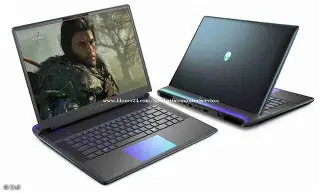
The 165Hz refresh rate felt like "enough" in 2025, and it still feels adequate today. While 240Hz and 360Hz panels exist, the RTX 5080 is rarely pushing 4K content past 160 FPS anyway, so the pairing feels balanced. I was particularly impressed by the color accuracy; I haven't had to recalibrate the screen once, and my print-to-screen matches remain spot on.
Daily Utility and Keyboard
The CherryMX ultra-low-profile mechanical keyboard is, in my opinion, the best keyboard ever put into a laptop. After over a million keystrokes (I write a lot), the switches still have that crisp, tactile "click" they had on day one. I haven't experienced any key-chatter or fading of the legends. One thing that bothered me, however, was the touchpad. It’s a bit small given the massive surface area of the laptop. I found myself using an external mouse 99% of the time, which makes the fancy RGB touchpad feel slightly redundant.
The Comparison: 2025 vs. 2026 Standards
| Feature | 2025 Launch Standard | 2026 Current Reality | The Area 51 Verdict |
|---|---|---|---|
| GPU (RTX 5080) | Leading Edge | High-Mid Range | Still excellent for 4K |
| RAM (32GB DDR5) | Optimal | Minimum for Creators | User-upgradeable (Big Plus) |
| Storage (Gen 5 SSD) | Blazing Fast | Standard | Load times still instant |
| Display | Mini-LED Premium | OLED/Mini-LED Common | Matches current flagships |
| Weight | Heavy | Still Heavy | Non-portable desktop replacement |
Pros and Cons: The Long-Term List
- Pro: Raw Power. Even in 2026, there is almost nothing this machine can't handle. From heavy AI local processing to 4K gaming, it remains a beast.
- Pro: Upgradeability. Unlike many modern "soldered" laptops, I was able to swap out the SSDs and upgrade the RAM to 64GB earlier this year with zero hassle.
- Pro: The Display. The 18-inch Mini-LED panel is still one of the most beautiful screens I've ever used for media consumption.
- Pro: Keyboard Feel. The mechanical switches provide a typing experience that actually rivals high-end desktop peripherals.
- Con: Portability. You cannot effectively use this on your lap. It’s too heavy, too hot, and the sharp edges of the chassis dig in after twenty minutes.
- Con: Power Consumption. It requires two power bricks for peak performance. Carrying those around is a nightmare, and they take up two outlets.
- Con: Fan Noise. The high-pitched whine of the fans under load hasn't gotten any better with age, making open-back headphones a no-go.
- Con: Webcam Quality. For a machine this expensive, the 1080p webcam is mediocre. In 2026, where 4K sensors are becoming the norm, it looks grainy.
Buying Guide: Is It Worth It in 2026?
If you are looking at the Alienware 18 Area 51 (2025) on the secondary market or as a clearance item in 2026, there are a few things you need to consider before pulling the trigger. Initially, this was a $3,500+ investment. Today, you should be looking for a significant discount. In my experience, if you can find this for under $2,200, it represents a better value than most brand-new 2026 "thin-and-light" gaming laptops that will throttle under heavy load.
First, check the battery health. I’ve kept mine plugged in most of the time, and the "Battery Saver" mode in the Alienware Command Center has helped, but these high-draw components are brutal on lithium-ion cells. Second, ensure it comes with both original power adapters. Third-party bricks often fail to provide the combined wattage necessary to let the RTX 5080 boost to its full 175W+ TGP. Finally, look at the screen for any dead pixels or excessive dimming zones. The Mini-LED array is complex, and while mine has been fine, long-term reliability of thousands of tiny LEDs can vary.
Discover deals on Electronics — updated daily.
Browse Now →I would recommend this machine specifically to three types of users: the "No-Compromise" gamer who doesn't mind the noise, the professional video editor who needs a mobile workstation to move between home and the office (but not to work on the train), and the enthusiast who loves the Alienware aesthetic. I would stay away if you are a student moving between classes or a "digital nomad" who values luggage space above all else.
Final Thoughts After 14 Months
What I found after a year of ownership is that the Alienware 18 Area 51 2025 RTX 5080 is a specialist’s tool. It is not a general-purpose laptop. It is a monster that demands a dedicated space and a lot of power. I was surprised by how much I came to rely on its stability. While my friends with thinner gaming laptops have complained about hinges breaking or motherboards cooking themselves, this "tank" of a machine just keeps on ticking.
Is it still "good" in 2026? It’s better than good; it’s still one of the most capable computers on the market. While 2026 models might offer slightly more efficient AI cores or 20% faster ray tracing, the sheer thermal headroom of the 18-inch chassis allows the 2025 hardware to run at its absolute limit. In the tech world, we're often told that the newest is always the best. After using this machine for over a year, I can tell you that sometimes, buying the "overbuilt" flagship from last year is the smartest way to ensure your hardware remains relevant for the years to come.
One thing is certain: as I sit here typing this on that satisfying mechanical keyboard, looking at the vibrant 18-inch display, I don't feel the "upgrade itch" yet. The 2025 Area 51 has plenty of life left in it, even as we move toward the next generation of hardware. It’s a heavy, loud, and expensive piece of kit, but for the performance it delivers, I haven't regretted a single day of owning it.